


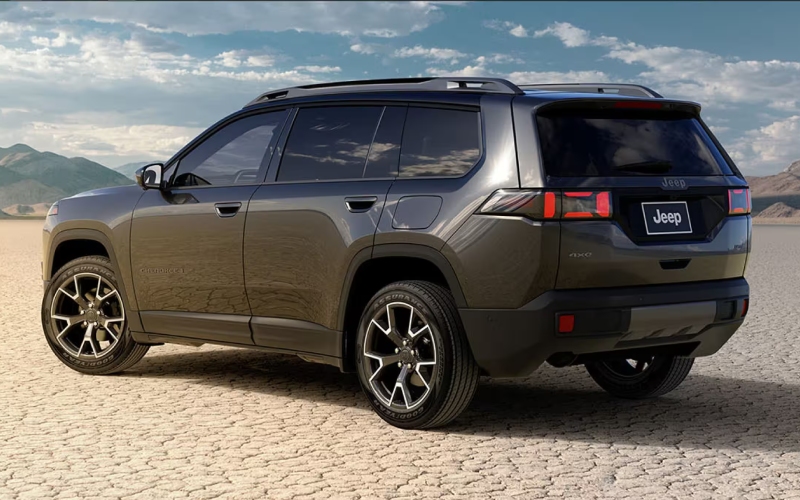
Fowler Jeep on I-240 - Is the 2026 Jeep Cherokee or Honda CR-V Better for Everyday Capability Around Yukon, OK?
Many SUV shoppers compare the 2026 Jeep® Cherokee and the Honda CR-V because both nameplates are practical, family-friendly, and equipped with modern technology. The question usually becomes more specific: which one is better for everyday capability? For drivers around Yukon, OK who want an SUV for commuting, school drop-offs, errands, highway trips, and occasional off-pavement exploring, the Jeep® Cherokee brings a stronger all-around answer. The Honda CR-V is a respected crossover with available Real Time AWD™, available hybrid power, standard Honda Sensing®, wireless Apple CarPlay® compatibility, wireless Android Auto™ compatibility, a standard 9-inch color touch-screen, and a comfortable cabin. Those strengths matter. However, the Cherokee goes further by making true Jeep® Brand capability part of the core formula rather than an add-on consideration.
The biggest difference starts underneath the vehicle. Every Jeep® Cherokee comes with the Jeep Active Drive I 4x4 System across all trims. That is a meaningful distinction because the CR-V offers available Real Time AWD™ on some trims and standard AWD on select hybrid trims, but not across the entire lineup. For shoppers who want traction confidence without studying a trim ladder, the Cherokee keeps the answer simple. It is engineered with capability in mind from the start, and that can be reassuring in Oklahoma driving, where city streets, highway construction, gravel access roads, and uneven surfaces may all be part of the same week.
Why Standard 4x4 Matters in Daily Driving
Standard 4x4 is not only about remote trails or rugged weekend plans. It can influence how an SUV feels during everyday driving, especially when road surfaces are inconsistent. The Jeep Active Drive I 4x4 System helps provide added confidence by sending power where it can be used effectively. Around Yukon, that can be helpful for commuters heading toward Oklahoma City, families visiting parks and athletic fields, or anyone who regularly transitions between paved roads and unpaved parking areas. A crossover with available AWD can be useful, but a Jeep® SUV with standard 4x4 builds that confidence into every model.
The Cherokee also has a more capability-focused identity than the CR-V. Jeep® notes a Best-in-Class Ramp Approach Angle and Best-in-Class Departure Angle for the Cherokee, along with up to 20 inches of water-fording capability. Those figures point to an SUV designed to do more than move people from point A to point B. The CR-V TrailSport Hybrid adds a more rugged appearance and standard AWD, which is appealing for Honda shoppers, but the Cherokee’s engineering story is more deeply tied to off-road heritage and all-terrain confidence.
Powertrain Comparison: Hybrid Efficiency With Jeep® Character
The Jeep® Cherokee uses a 1.6L I4 Turbo Hybrid engine that supplements gas-powered propulsion with electricity from electric motors. It gathers electricity through regenerative braking, so no plug is required. That makes it easy to live with for drivers who want hybrid benefits without changing daily habits. The system delivers 210 maximum horsepower and up to 230 maximum pound-feet of torque, giving the Cherokee enough response for merging, passing, and climbing grades while still supporting efficient travel.
The Honda CR-V offers two main powertrain paths: a 1.5L turbocharged engine on LX, EX, and EX-L trims, plus a 204-horsepower hybrid powertrain on Sport Hybrid, Sport-L Hybrid, TrailSport Hybrid, and Sport Touring Hybrid trims. The CR-V hybrid is smooth and efficient, and Honda deserves credit for offering a well-developed system. Yet for shoppers prioritizing capability, the Cherokee’s combination of Turbo Hybrid power, standard 4x4, and an Unsurpassed-in-Class Towing Capacity of 3,500 pounds gives it a more versatile edge. That towing rating can matter for small trailers, outdoor gear, light utility needs, and active family schedules.
- Standard capability: The Cherokee includes Jeep Active Drive I 4x4 System on every trim.
- Hybrid convenience: The Cherokee does not require plug-in charging.
- Utility advantage: The Cherokee offers a 3,500-pound towing capacity.
- Driver confidence: The Cherokee pairs everyday efficiency with authentic Jeep® Brand capability.
Interior Space and Technology for Real Life
Everyday capability also includes cabin usefulness. The Jeep® Cherokee offers seating for five, 107 cubic feet of passenger volume, 33.6 cubic feet of rear cargo space, and 68.3 cubic feet of maximum cargo volume with the second-row seats folded. That space supports a wide range of routines, from groceries and backpacks to luggage and outdoor gear. The Honda CR-V is also spacious and remains one of the more practical crossovers in its segment, so cargo room may not be the only deciding factor. Instead, the Cherokee’s advantage comes from combining that space with a cabin that feels ready for more varied use.
Technology is another strong point for the Cherokee. Its 12.3-inch touchscreen with the latest infotainment tech from Uconnect® gives drivers a large, intuitive interface for apps, entertainment, vehicle information, and smartphone connectivity. The 10.25-inch Digital Cluster Display places real-time driving information directly behind the steering wheel. Wireless Apple CarPlay® Support and Android Auto™ Compatibility help reduce cable clutter and keep familiar apps close at hand. The Honda CR-V offers a standard 9-inch color touch-screen, wireless Apple CarPlay® compatibility, wireless Android Auto™ compatibility, and a wireless phone charger standard on all trims, so it is certainly well equipped. Even so, the Cherokee’s larger central screen and dedicated digital cluster give it a more commanding, premium-feeling layout.
Safety and Driver Assistance
Safety technology is central to both SUVs, but the Jeep® Cherokee stands out with over 140 standard and available safety and security features. Standard equipment includes Active Driving Assist System, Full-Speed Forward Collision Warning with Active Braking, Blind Spot Monitoring with Rear Cross Path Detection, Active Lane Management System, Adaptive Cruise Control with Stop and Go, and Drowsy Driver Detection. Available features such as the 360° Surround View Camera and Digital Rearview Mirror add even more visibility support in tight spaces.
The Honda CR-V includes Honda Sensing® standard, which gives it a strong foundation for driver assistance. Shoppers can expect a thoughtful suite of safety features from Honda, and that is one reason the CR-V remains popular. The difference is that the Cherokee layers its safety story on top of a more robust capability package. For many buyers, that combination is important. An SUV should help with awareness in traffic, support confidence on longer drives, and feel secure when road conditions are less predictable. The Cherokee answers those needs with both technology and mechanical readiness.
- Start with your driving needs: If standard traction matters, the Cherokee has the advantage.
- Think about towing and gear: The Cherokee’s 3,500-pound towing capacity expands its usefulness.
- Compare cabin technology: The Cherokee’s 12.3-inch touchscreen and 10.25-inch Digital Cluster Display create a modern command center.
- Consider long-term flexibility: The Cherokee is designed for daily commuting, family use, and weekend exploring.
Which SUV Should Yukon-Area Shoppers Choose?
For shoppers who mainly want a comfortable crossover with proven efficiency and straightforward technology, the Honda CR-V is a solid option. It offers a smooth daily experience and a practical cabin. However, for shoppers who want an SUV that feels more prepared for Oklahoma roads, light towing, weekend plans, and changing terrain, the Jeep® Cherokee is the stronger recommendation. It gives drivers standard 4x4, hybrid convenience without a plug, a strong towing rating, generous cargo flexibility, and an impressive safety and technology package.
Fowler Chrysler Dodge Jeep Ram on I-240 is serving Moore, Norman, and Yukon with a Jeep® Brand lineup built for drivers who expect more from an SUV. The Cherokee is especially compelling because it does not ask shoppers to choose between efficiency and capability. It brings both together in a practical, comfortable, and confidently styled package. For anyone comparing these two SUVs, a test drive in the Cherokee is the best way to feel the difference in seating position, screen layout, road manners, and overall readiness.
Frequently Asked Questions:
Does the Jeep® Cherokee need to be plugged in?
No. The Jeep® Cherokee uses regenerative braking to help supply electricity to its hybrid system, so plug-in charging is not required.
Is the Honda CR-V available with AWD?
Yes. The Honda CR-V offers available Real Time AWD™, and AWD is standard on select trims such as TrailSport Hybrid and Sport Touring Hybrid.
Why is the Jeep® Cherokee better for capability-focused shoppers?
The Cherokee includes standard Jeep Active Drive I 4x4 System across all trims, offers a 3,500-pound towing capacity, and brings Jeep® Brand engineering that supports more varied driving conditions.
Which SUV has the larger touchscreen?
The Jeep® Cherokee offers a 12.3-inch touchscreen, while the Honda CR-V features a standard 9-inch color touchscreen.